You Sing to Me – All Products
Price range: $1.29 through $74.99
Description
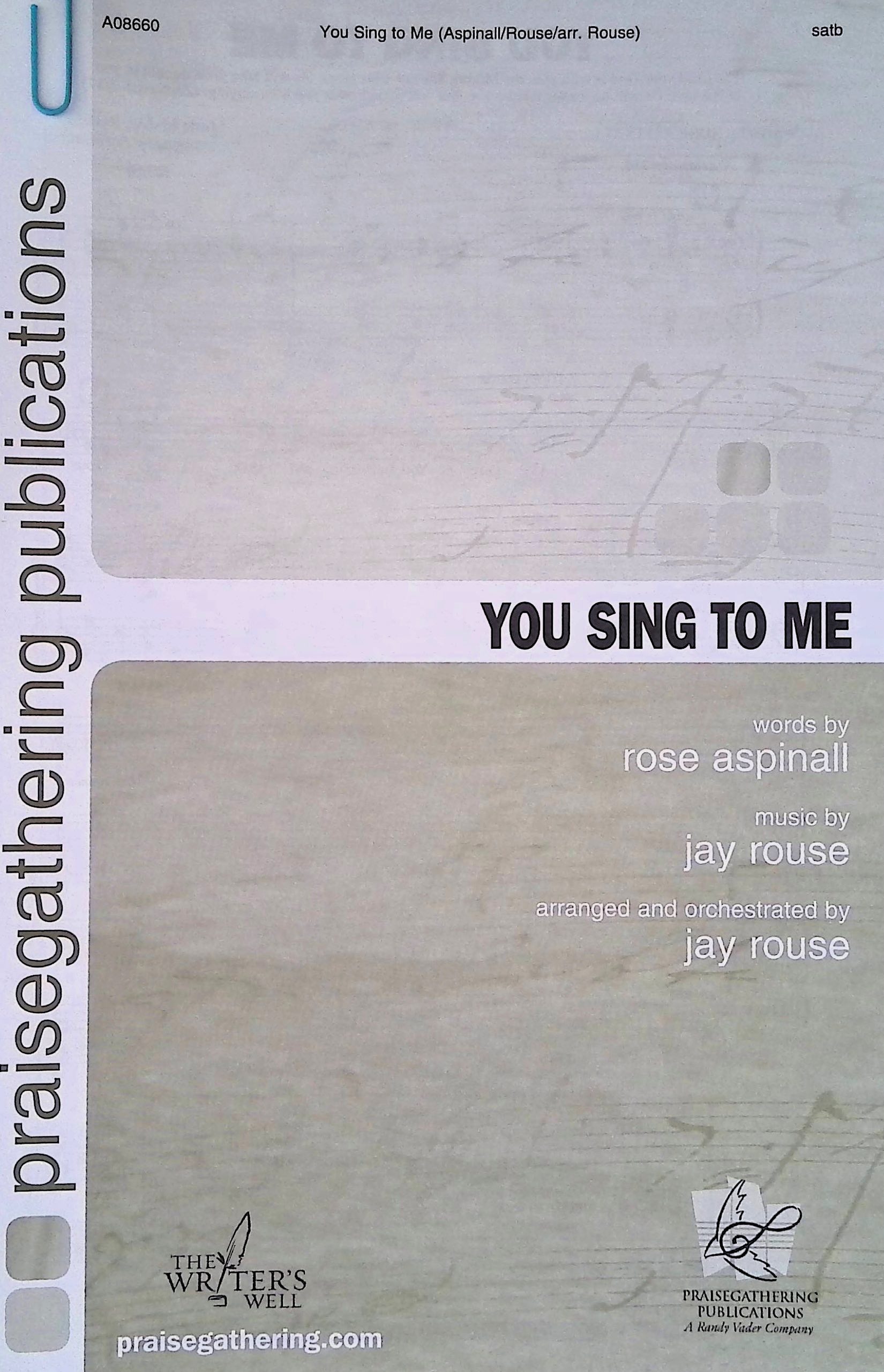
You Sing to Me’ by Jay Rouse, is a captivating satb that showcases exceptional musicality and innovation. Published by PraiseGathering Music, this piece is perfect for both concert performances and special occasions.
SCORE SPOTLIGHT: YOU SING TO ME
Words by Rose Aspinall
Music by Jay Rouse
Arranged and Orchestrated by Jay Rouse
Worship begins not with humanity reaching toward God, but with God reaching toward humanity.
Many worship songs focus on believers singing, praying, seeking, and responding to God. You Sing To Me reverses that perspective. Throughout the anthem, God is portrayed as the initiator of grace, healing, restoration, forgiveness, and redemption. Before the believer responds in worship, God has already spoken, called, healed, forgiven, and sung over His people.
That theological reversal creates both the emotional center and the distinguishing characteristic of the piece.
The Song That Begins With God
Most worship music begins with humanity reaching toward God. We sing. We pray. We worship. We seek. The movement is familiar. The believer cries out. God answers. The worshiper responds. The congregation joins together in praise.
You Sing To Me offers a remarkably different perspective.
Inspired by the promise of Zephaniah 3:17, printed at the head of the score, the anthem begins not with humanity’s pursuit of God but with God’s pursuit of humanity. The scriptural foundation is one of the most tender and surprising images in Scripture: a God who delights in His people so deeply that He sings over them with joy.
Rather than asking what believers bring to God, the anthem asks what God continually offers to His children. This simple shift transforms the emotional and theological experience of the piece. The title phrase becomes far more than a lyrical refrain. It becomes an affirmation of identity, belonging, and grace. The believer is no longer striving to gain God’s attention but resting in the assurance that God’s voice has already spoken first.
Before there was worship, there was invitation. Before there was praise, there was grace. Before there was response, there was love.
That idea forms the heart of the anthem.
A Journey From Uncertainty To Restoration
The opening emotional world of the anthem is vulnerable. Marked Warmly in a gently rocking 6/4, the piece opens quietly, with the women singing alone in unison of approaching God trembling and shaking. The singer comes to God not from a place of easy confidence, but from a place of need. Yet God’s response is not condemnation. God’s response is mercy.
This is one of the most pastorally powerful aspects of the piece. Many sacred choral works speak about forgiveness. Fewer successfully communicate what forgiveness feels like. You Sing To Me gives that experience emotional shape. God’s voice is portrayed as cleansing, healing, and restoring. Shame is not merely named; it is answered.
That is where the anthem begins to move from comfort into transformation. The piece does not simply say that God loves His people. It shows God actively restoring them.
Overwhelmed By Grace
One of the most striking emotional turns in the anthem is the repeated idea of being overwhelmed and overcome. In another context, those words might suggest defeat. Here, they suggest something very different.
The believer is overwhelmed by mercy. Overcome by grace. Overtaken by love.
Rather than depicting spiritual collapse, the anthem depicts the experience of encountering a God whose compassion exceeds expectation. The emotional force of the piece comes from this reversal. What begins as vulnerability becomes worship. What begins as weakness becomes assurance.
This turning point matters because it explains the worship response that follows. The believer does not worship in order to earn God’s love. The believer worships because God’s love has already arrived.
That is the theological structure of the piece. Grace comes first. Worship follows.
Hymns Of Redemption
As the anthem develops, its focus broadens. What begins as one believer’s encounter with God becomes a larger picture of redemption. The music and text expand from personal reassurance into the larger work of Christ: healing, freedom, restoration, and forgiveness.
The refrain is especially important because it prevents the anthem from becoming merely private or sentimental. The song is not only about one person feeling comforted. It is about the redemptive work of God in the world.
Broken lives are restored. The wounded are healed. Those carrying shame are met with mercy. The wandering heart is called home.
This gives the anthem congregational significance. It is personal enough to comfort an individual and broad enough to speak to an entire worshiping community.
The God Who Restores
As the piece unfolds, God is portrayed not only as one who comforts, but as one who restores. This distinction matters. Comfort can soothe pain. Restoration changes the future.
You Sing To Me presents God as the one who heals faithlessness, awakens holy desire, and keeps the wandering heart from straying. The language of the anthem is not passive. God is active throughout the piece. He calls, heals, restores, forgives, renews, and invites.
This is why the distinctive insight is so important. The anthem is not primarily about humanity reaching upward. It is about God reaching outward. The believer’s worship is a response to divine initiative. That gives the piece theological clarity and emotional power.
Why Conductors Will Appreciate This Piece
Jay Rouse’s setting allows the text to lead the musical journey. The writing is accessible without feeling thin, expressive without becoming overly complicated, and contemporary without losing choral substance. This balance makes the anthem useful for a wide range of church choirs.
The texture plan supports the emotional arc. The piece opens with ladies in unison, answers with men in unison, gathers the full choir in unison at the central turning point, and opens into divisi for the refrain. The home key of E flat major lifts upward at the final refrain, and the anthem closes in a hushed coda marked Slower with warmth, where quiet Alleluias give way to a final pianissimo statement of the title phrase.
Conductors will appreciate the emotional arc. The piece moves naturally from vulnerability to assurance, from personal encounter to broader redemption, and from quiet reflection to confident worship. Those shifts give directors meaningful interpretive material to shape in rehearsal.
The recurring musical ideas provide unity. The text provides emotional clarity. The harmonic language provides warmth. The overall structure gives the anthem a sense of growth and arrival.
This is the kind of piece that can be learned by many church choirs while still offering enough depth to reward careful preparation. A dramatic reading from The Writer’s Well is available as a free companion download, offering an additional programming option for worship planners.
A Different Kind Of Worship Anthem
Many worship anthems celebrate what believers say to God. You Sing To Me celebrates what God says to believers.
That difference may seem small, but it changes the entire emotional experience of the piece. The anthem reminds worshipers that faith begins not with human effort but with divine invitation.
God speaks first. God calls first. God heals first. God restores first. God loves first.
And because He does, worship becomes the joyful response to grace already given. That is the theological heartbeat of the anthem.
Why This Piece Resonates
You Sing To Me resonates because it joins theological depth with emotional accessibility. The central image is easy to understand. Everyone knows the comfort of being spoken to with love. Everyone knows the power of hearing reassurance when afraid, hope when weary, and forgiveness when ashamed.
By placing that human experience within the context of God’s relationship with His people, the anthem transforms a familiar emotional reality into a worshipful expression of divine grace.
The piece comforts without becoming sentimental. It encourages without becoming shallow. It speaks directly to congregations because it names something many believers need to hear:
God’s love is not silent. God’s mercy is not distant. God’s voice is still calling.
Why This Piece Matters
Most worship music focuses on humanity reaching toward God. You Sing To Me focuses on God reaching toward humanity.
By centering the biblical image of God singing over His people, the anthem offers a perspective that is both emotionally comforting and theologically significant. The text moves beyond general encouragement and presents a vision of grace that actively heals shame, restores broken lives, forgives sin, renews faith, and calls believers into worship.
The anthem’s emphasis on divine initiative makes it especially meaningful for congregations walking through seasons of weariness, uncertainty, grief, or spiritual renewal. Rather than asking listeners to strive harder, it reminds them that God has already spoken words of love, redemption, healing, and hope over their lives.
Few worship anthems capture that message with such clarity and tenderness.
Additional information
| Catalog # | A08660 |
|---|---|
| Voicing | |
| Composers | |
| Arrangers | |
| Authors | |
| Release Date | |
| Season | |
| Publisher | |
| Editor |
You May Also Like...